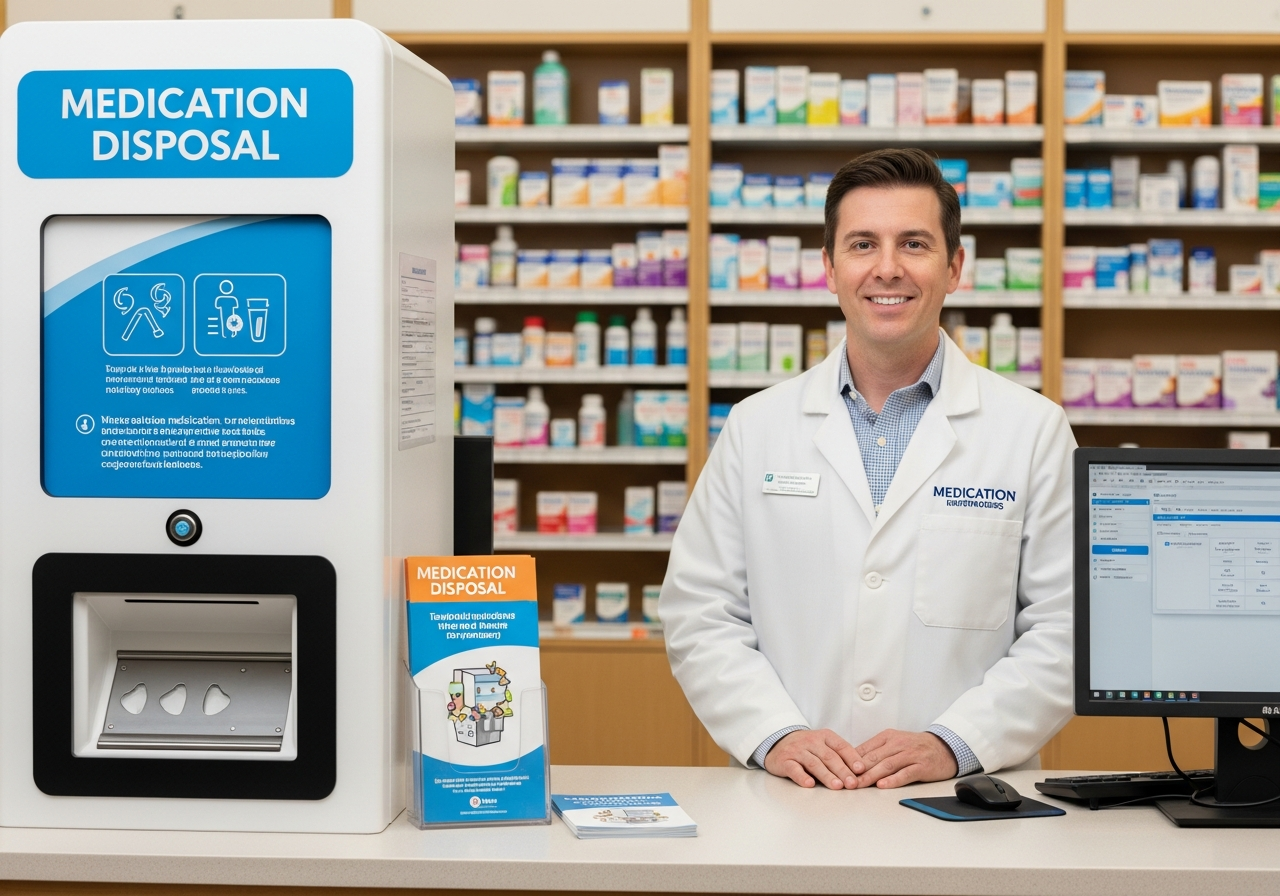
Retail & Long-Term Care Pharmacy Waste
Tailored pharmaceutical waste programs for South Florida retail pharmacies, nursing homes, and long-term care facilities — covering patient returns, expired stock, and DEA take-back compliance.
Retail pharmacies, nursing homes, assisted living facilities, and long-term care pharmacies face a unique combination of regulatory obligations that differ significantly from hospital and clinic pharmaceutical waste programs. The Drug Supply Chain Security Act (DSCSA), DEA take-back requirements, Florida Board of Pharmacy rules, and Florida AHCA long-term care regulations all intersect in this sector.
Patient medication returns are among the most frequent compliance challenges for retail and LTC pharmacies. Returned medications cannot be redispensed, donated, or disposed of in general waste. DEA-authorized take-back programs, where available, handle controlled substance returns. Non-controlled medications require Florida-compliant pharmaceutical waste disposal through a licensed vendor — not general solid waste.
Long-term care pharmacies and nursing homes face additional challenges: patient death or discharge creates immediate medication disposal obligations. Florida Administrative Code Rule 59A-4.108 requires that medications belonging to deceased or discharged nursing home residents be returned to the dispensing pharmacy or destroyed within a specified period. Our LTC pharmacy waste program is designed around these timelines.
Assisted living facilities (ALFs) regulated by Florida AHCA face similar medication management and disposal obligations under Chapter 429 rules. We serve ALFs of all sizes across South Florida with scheduled pickup programs, proper container placement, and documentation that satisfies AHCA survey requirements.
What We Handle
- Patient-returned medication programs for retail pharmacies
- Expired retail pharmacy inventory disposal
- Nursing home and ALF deceased/discharged resident medication disposal
- DEA-authorized collector programs for controlled substance returns
- Long-term care pharmacy waste under Florida Rule 59A-4.108
- DSCSA-compliant documentation for drug product disposals
- Combination container programs (sharps + pharmaceutical)
- Same-week service across all South Florida service areas
SERVICE REQUEST
Request a Quote
Share your facility and service needs.
Frequently Asked Questions
Patient-returned medications cannot be redispensed, donated, or disposed of in general waste under Florida law and DEA regulations. Controlled substance returns require a DEA-authorized collector program. Non-controlled medications must be disposed of through a licensed pharmaceutical waste vendor under Florida Statute 403.7226. Our retail pharmacy program handles both waste streams with a single scheduled pickup.
Florida Administrative Code Rule 59A-4.108 requires nursing homes to return medications belonging to deceased or discharged patients to the dispensing pharmacy within a specified period, or destroy them using a licensed pharmaceutical waste vendor. Our LTC program is designed around these timelines and provides documentation that satisfies AHCA survey requirements.
A DEA-authorized collector program allows retail pharmacies to serve as official collection sites for unwanted controlled substances from the public (take-back events or collection receptacles) or to accept patient returns. DEA authorization requires a separate application and ongoing compliance with 21 CFR Part 1317. Our team advises on the authorization process and manages disposal of collected controlled substances.
Yes. Florida ALFs regulated by AHCA under Chapter 429 have specific medication management and disposal requirements. Medications may not be flushed, discarded in general waste, or stored beyond specified timeframes. Our ALF program provides compliant disposal containers, scheduled pickups, and AHCA-ready documentation.
Yes. Long-term care pharmacies that service multiple facilities can use our consolidated program to manage pharmaceutical waste across all their client locations. We provide a single invoice, unified compliance calendar, and account-level reporting — reducing the administrative burden on your pharmacy team.
Other Pharmaceutical Waste Services
Ready to Get Started?
Confirm accepted materials, location coverage, partner roles and available records for your request.