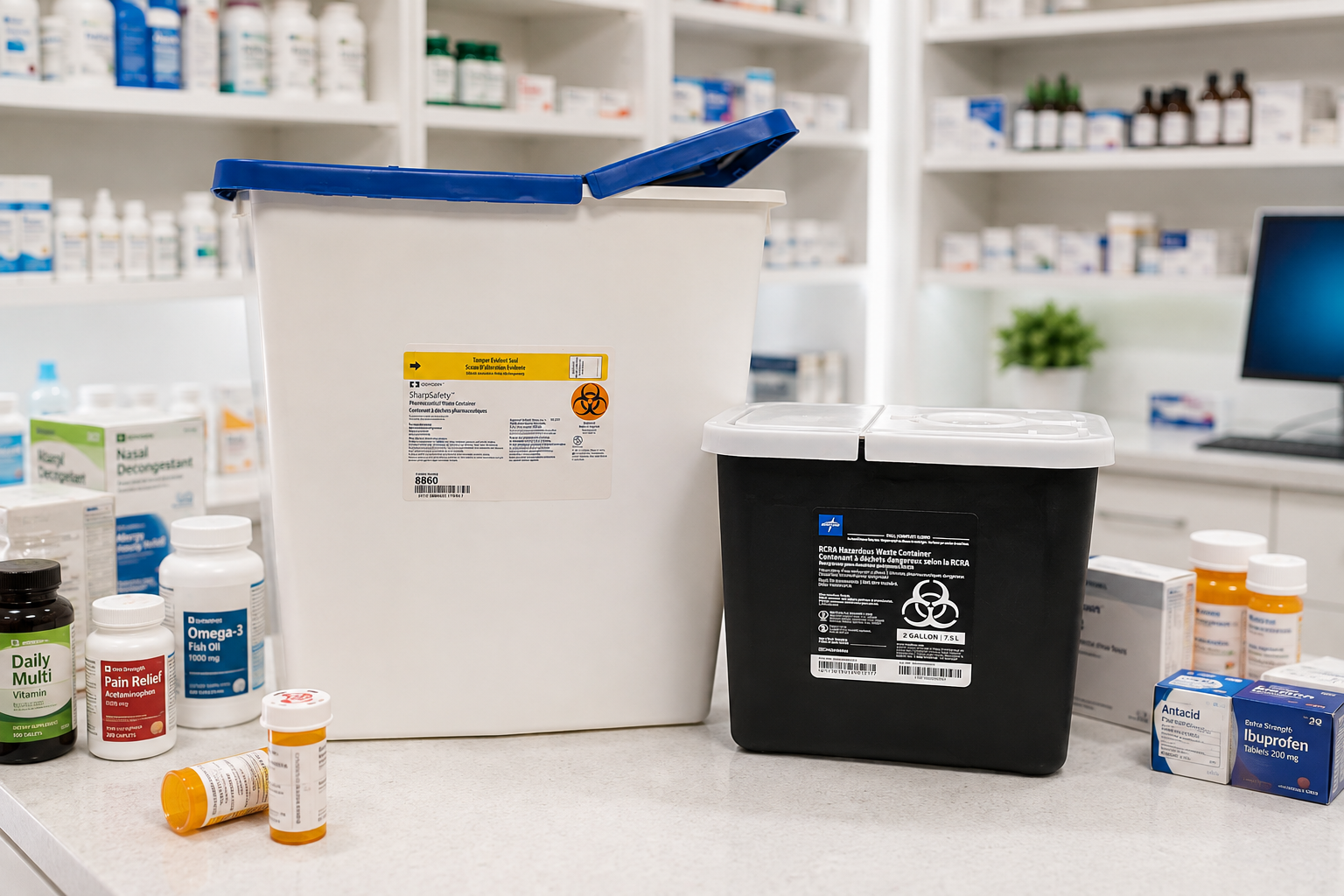
Non-Hazardous Pharmaceutical Waste
OTC medications, vitamins, supplements, and non-RCRA prescription drugs — properly disposed under Florida Statute §403.7226 with blue-lid containers and Certificate of Destruction documentation.
Not all pharmaceutical waste meets EPA's RCRA hazardous definition — but that doesn't mean it can go in the trash or down the drain. Florida Statute 403.7226 prohibits disposal of non-hazardous pharmaceutical waste in solid waste facilities, sewers, septic systems, or surface water unless the waste meets specific criteria. This covers a wide range of products: OTC medications, vitamins, dietary supplements, and non-RCRA prescription drugs.
Many South Florida healthcare facilities incorrectly assume that if a medication is not RCRA-listed, it can be discarded in general waste or incinerated in regular trash. Florida DEP enforcement actions have targeted facilities that disposed of non-hazardous pharmaceuticals in unauthorized ways — even for seemingly benign products like vitamins and supplements.
Our non-hazardous pharmaceutical waste program uses blue-lid, UN-approved collection containers that are clearly differentiated from RCRA yellow-lid units. This color-coded segregation is the key compliance control — it ensures that non-hazardous and hazardous drug waste streams remain separate throughout the chain of custody.
We serve pharmacies, medical clinics, dental offices, nursing homes, assisted living facilities, and any South Florida healthcare organization generating non-hazardous pharmaceutical waste. Our program includes container delivery, scheduled pickup, licensed transport, and a Certificate of Destruction for every disposal event — the documentation you need for a Florida DEP inspection or JCAHO survey.
What We Handle
- Over-the-counter medications (analgesics, antihistamines, cough syrups)
- Vitamins, dietary supplements, and nutraceuticals
- Non-RCRA prescription drugs that don't meet P-list or U-list criteria
- Expired medication inventory from pharmacies and clinics
- Sample medications and drug product returns
- Blue-lid UN-approved containers for non-hazardous pharma waste
- Florida §403.7226 compliant disposal and documentation
- Certificate of Destruction for every pickup — audit-ready
SERVICE REQUEST
Request a Quote
Share your facility and service needs.
Frequently Asked Questions
No. Florida Statute 403.7226 prohibits disposal of pharmaceutical waste in solid waste facilities unless it meets specific exemptions. Additionally, the FDA advises against flushing most medications. Many communities have adopted the Florida Drug Take-Back Act requirements. Healthcare facilities are specifically prohibited from discarding pharmaceutical waste with general solid waste under Florida DEP rules.
RCRA hazardous pharmaceutical waste is specifically listed in 40 CFR Part 261 (P-list and U-list drugs such as warfarin ≥0.3%, nicotine, phentermine) or meets RCRA characteristic criteria (ignitability, corrosivity, reactivity, toxicity). Non-hazardous pharmaceutical waste is everything else — OTC drugs, vitamins, non-listed prescription medications. Both require proper disposal under Florida law, but different containers and documentation are required.
Blue-lid containers are for non-hazardous pharmaceutical waste only. Yellow-lid containers are for RCRA hazardous pharmaceutical waste (P-listed and U-listed drugs). Mixing RCRA hazardous drugs into a blue-lid container contaminates the entire container and requires it to be managed as RCRA hazardous waste — dramatically increasing your disposal costs and regulatory obligations.
Yes. Florida pharmacies — retail, compounding, hospital, and long-term care — generate a mix of hazardous and non-hazardous pharmaceutical waste. A properly segregated program with separate blue-lid and yellow-lid containers, maintained by a licensed pharmaceutical waste vendor, is the most cost-efficient compliant solution and the one most likely to withstand Florida DEP inspection.
You receive a Certificate of Destruction after every pickup documenting the date, container count or volume, and the licensed treatment pathway used for disposal. This documentation satisfies Florida DEP recordkeeping requirements and supports JCAHO, CMS, and ACHC accreditation surveys.
Other Pharmaceutical Waste Services
Ready to Get Started?
Confirm accepted materials, location coverage, partner roles and available records for your request.