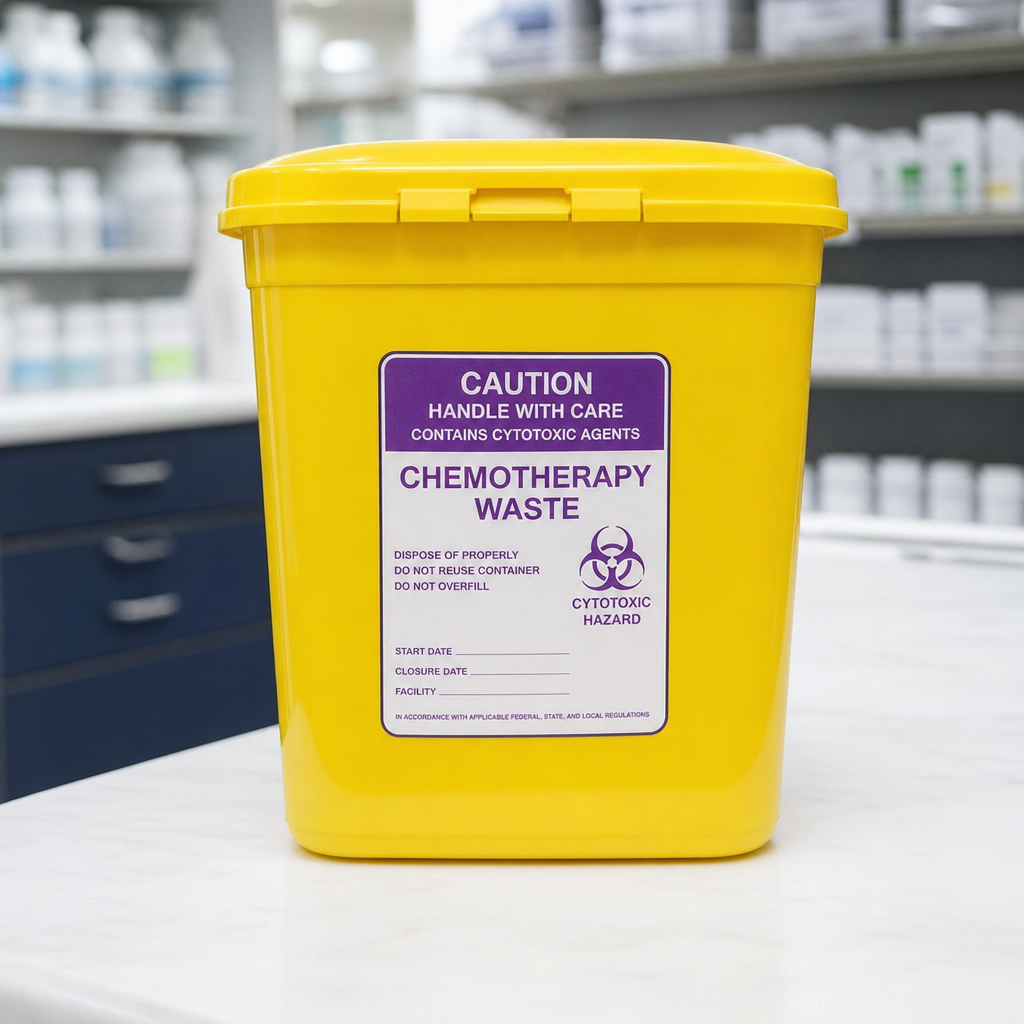
Chemotherapy Waste Disposal for Oncology Facilities
Exodus Waste Solutions provides chemotherapy waste disposal service for South Florida oncology clinics, infusion centers, hospital departments and pharmacies. Service planning addresses distinct streams such as hazardous chemotherapy drugs, trace chemotherapy materials and contaminated protective items, with collection and documentation coordinated for the facility. Describe your operation and location to arrange an appropriate service plan. Confirm accepted materials and coverage with the team.
Separate chemotherapy waste streams
Chemotherapy waste disposal planning distinguishes hazardous chemotherapy drugs, trace chemotherapy waste and contaminated personal protective equipment. These streams are not interchangeable; confirm classification and accepted materials for the facility.
Hazardous Chemotherapy Waste
Some chemotherapy-related drugs may fall under hazardous waste rules. Classification depends on the material and should be confirmed for the facility.
- Describe the drug or material
- Identify the source activity
- Review applicable classification
- Confirm service scope
Trace Chemotherapy Waste
Trace chemotherapy waste is a distinct category associated with materials that may contain residual chemotherapy drug. Review specific items with the service team before arranging collection.
- Describe materials with possible residue
- Share facility workflow details
- Confirm category and accepted items
- Confirm collection arrangements
Chemo-Contaminated PPE & Materials
Contaminated protective items can require a separate waste stream. Facility personnel should identify the materials and confirm the applicable service pathway.
- Describe protective items
- Identify use and source
- Confirm classification and acceptance
- Coordinate with facility procedures
Review material classifications
Share your chemotherapy-related materials with the facility’s environmental or safety contact and confirm the appropriate service scope before arranging collection.
Coordinate collection for oncology operations
Chemotherapy waste disposal service can be planned around an oncology clinic, infusion center, hospital pharmacy department or compounding operation. Share recurring or occasional collection needs so planning can reflect the facility’s workflow.
Service coordination includes confirming location, accepted materials, collection arrangements and records for the facility. Confirm each detail with the team before scheduling.
Keep chemotherapy service records organized
Keep collection records with the facility’s oncology waste program and confirm which documents accompany the agreed service. For related regulated medical waste, see the overview; general pharmaceutical waste disposal has a separate service page. Hospital teams can also review waste service information for hospitals.
Facilities That May Need Chemotherapy Waste Service
Oncology Clinics & Infusion Centers
Oncology practices and infusion centers can discuss chemotherapy-related waste streams and collection needs for their operations.
Hospital Oncology Units
Hospital departments can describe the materials generated and coordinate service planning for their location.
Outpatient Pharmacy & Compounding
Pharmacy and compounding operations can review chemotherapy-related materials and confirm the appropriate service scope.
Cancer Centers
Cancer centers can identify the distinct streams generated by their operations when discussing collection planning.
Palliative & Hospice Care
Care organizations can share their operating model and location so the team can confirm whether service can be arranged.
Veterinary Oncology
Veterinary facilities can describe their chemotherapy-related waste and confirm the applicable service options for their location.
Chemotherapy Waste Disposal Questions
Chemotherapy waste disposal planning distinguishes hazardous drugs, trace chemotherapy materials and contaminated protective items. Classification depends on the material and facility details; share those details with your compliance lead and confirm the service scope.
Container needs depend on the waste stream and service arrangement. Describe your facility’s materials and confirm available container options and accepted items before arranging collection.
Pharmacy and compounding operations can share the materials generated, location and workflow so the team can discuss collection planning and confirm applicable service details.
These may be distinct waste streams. Identify each stream separately and confirm accepted materials and collection arrangements for the facility.
Confirm the materials accepted, location coverage, collection arrangements and available documentation with Exodus when requesting service.
Plan Chemotherapy Waste Disposal Service
Describe your oncology operation and location to discuss chemotherapy waste disposal planning. Confirm accepted materials, service coverage and documentation with the team.
← Back to Regulated Medical Waste Overview