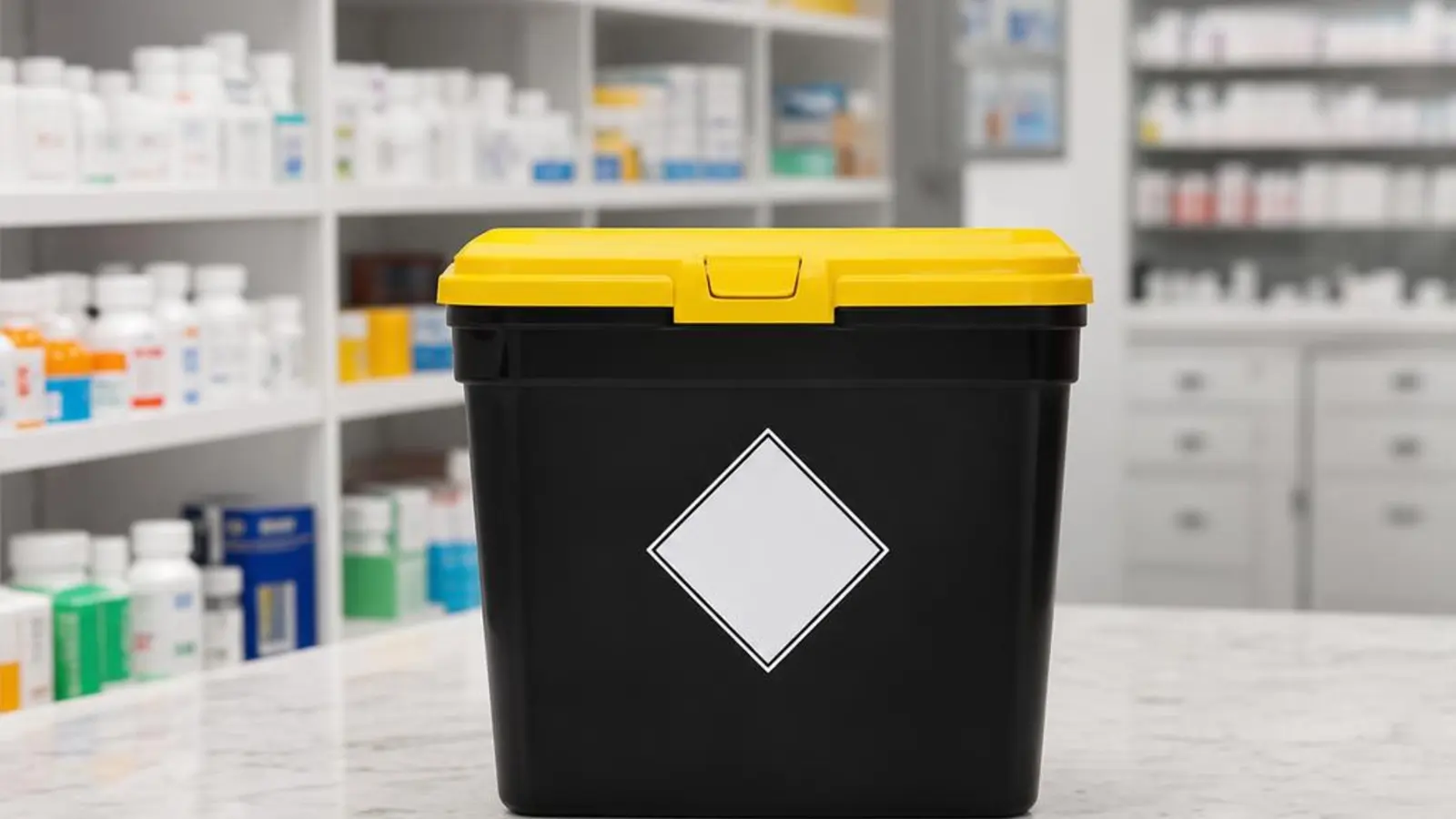
RCRA Hazardous Drug Waste
EPA RCRA-compliant disposal of P-listed and U-listed hazardous pharmaceutical waste — warfarin, nicotine, and other listed drugs requiring yellow-lid containers, manifests, and EPA-approved treatment.
A subset of pharmaceutical waste meets EPA's definition of RCRA hazardous waste — specifically, drugs that appear on the P-list (acutely hazardous) or U-list (hazardous) in 40 CFR Part 261. These include commonly used medications such as warfarin (≥0.3%), nicotine, phentermine, and certain chemotherapy agents. Disposing of these drugs as ordinary pharmaceutical waste is an EPA violation that carries penalties up to $70,117 per day per violation.
Under the 2019 Hazardous Waste Pharmaceuticals Rule (40 CFR Part 266 Subpart P), healthcare facilities are prohibited from sewering RCRA hazardous pharmaceutical waste and must manage it under EPA hazardous waste regulations — separate from non-hazardous pharmaceutical waste, with yellow-lid containers, RCRA manifests, and Land Disposal Restriction (LDR) certifications.
Exodus Waste Solutions supports healthcare facilities with compliant RCRA hazardous pharmaceutical waste programs for South Florida. We deliver yellow-lid, UN-approved containers, assist with proper waste segregation and documentation requirements, and provide compliance guidance on RCRA classification, manifesting, and applicable management standards for P-listed and U-listed pharmaceutical waste. Every disposal event is supported with a uniform hazardous waste manifest and LDR certification. Important: Exodus Waste Solutions does not currently transport RCRA-regulated hazardous waste under its own EPA Identification Number.
Generator classification matters: Large Quantity Generators (LQGs), Small Quantity Generators (SQGs), and Very Small Quantity Generators (VSQGs) have different accumulation time limits, reporting requirements, and disposal options. Our team classifies your facility accurately and tailors the program accordingly.
What We Handle
- P-listed drugs: warfarin (≥0.3%), nicotine, phentermine, epinephrine, and others
- U-listed hazardous pharmaceuticals: chloroform, lindane, reserpine, and others
- Yellow-lid RCRA-compliant containers for hazardous drug segregation
- Uniform Hazardous Waste Manifests (EPA Form 8700-22) for every shipment
- Land Disposal Restriction (LDR) certifications
- Compliance guidance on RCRA management standards and EPA-permitted TSDF requirements
- Generator classification assessment (LQG / SQG / VSQG)
- 3-year manifest recordkeeping maintained for EPA compliance
SERVICE REQUEST
Request a Quote
Share your facility and service needs.
Frequently Asked Questions
No. Exodus Waste Solutions does not currently transport RCRA-regulated hazardous waste under its own EPA Identification Number. Our team provides compliance guidance to help facilities understand proper RCRA waste classification, segregation requirements, documentation obligations, and applicable management standards.
Common P-listed pharmaceutical wastes include warfarin (≥0.3%), nicotine in commercial-chemical product form, phentermine, physostigmine, and epinephrine. Common U-listed pharmaceutical wastes include chloroform, lindane, reserpine, and certain other drugs. A complete list is in 40 CFR Part 261 Subparts D and E. Our team performs a free waste classification for your specific drug inventory.
Under the RCRA mixture rule, mixing a listed hazardous waste with any other waste makes the entire mixture a listed hazardous waste — regardless of volume. Mixing RCRA-listed pharmaceutical waste with non-hazardous medications creates a much larger hazardous waste liability. Proper segregation at the point of generation is essential.
The EPA's 2019 rule (40 CFR Part 266 Subpart P) created a sector-specific hazardous waste management framework for healthcare facilities. It prohibits sewering hazardous pharmaceutical waste, allows reverse distribution under certain conditions, and streamlines some management options. Florida adopted the federal rule; state regulations may impose additional requirements.
Generator classification is based on the monthly quantity of hazardous waste you generate: LQG = 1,000 kg or more; SQG = 100–999 kg; VSQG = less than 100 kg. Different rules apply to each category, including accumulation time limits (90 days for LQGs, 270 days for SQGs) and biennial reporting requirements. Our team assesses your classification during the initial intake.
EPA requires a minimum 3-year retention of hazardous waste manifests, LDR certifications, exception reports, and biennial reports (for LQGs). These records must be available for EPA and state inspection at any time. Exodus maintains copies of all manifests and provides them to your compliance team after every pickup.
Other Pharmaceutical Waste Services
Ready to Get Started?
Confirm accepted materials, location coverage, partner roles and available records for your request.