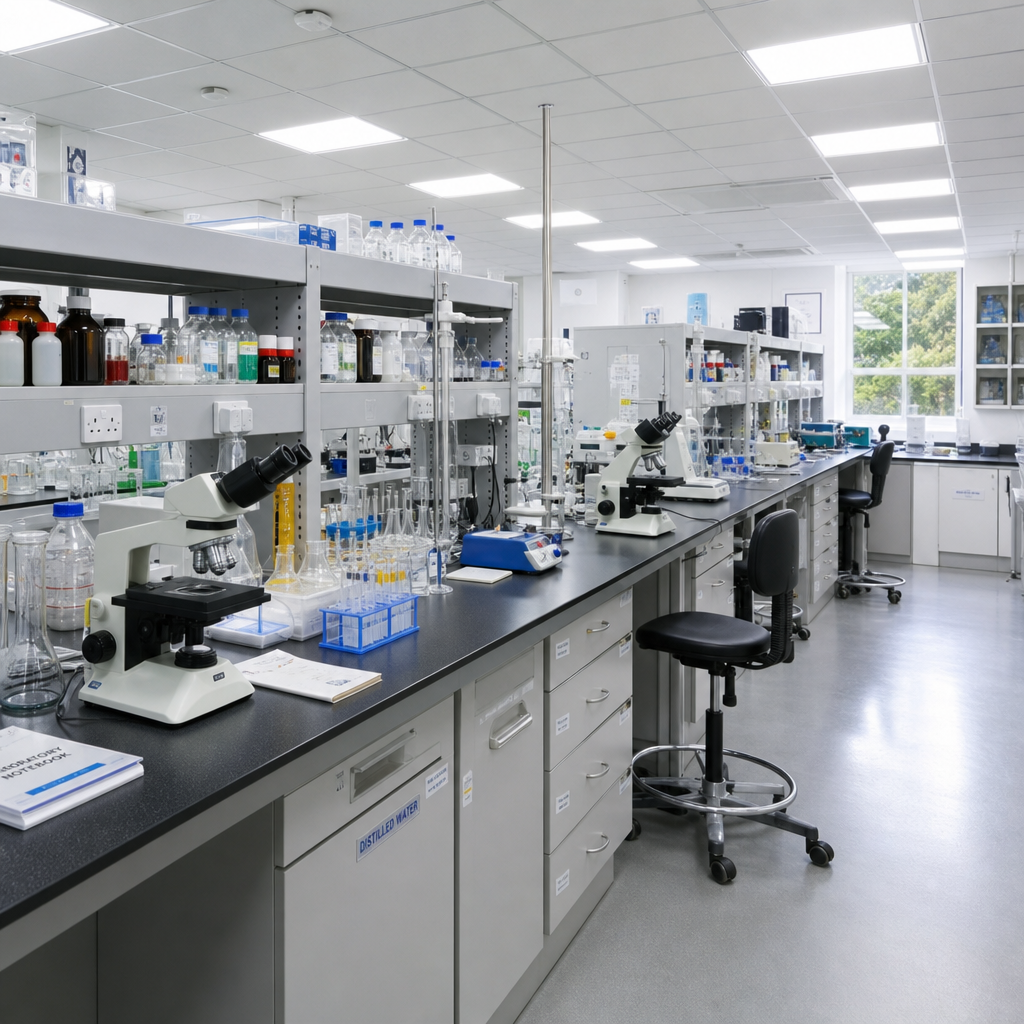
Laboratory Waste Disposal
for Your Facility
Certified disposal of microbiological cultures, discarded vaccines, human cell lines, contaminated lab equipment, and biological research waste for clinical labs, research institutions, hospitals, and biotech companies.
What Is Laboratory Regulated Medical Waste?
Laboratory waste becomes regulated medical waste when it has been in contact with — or may contain — pathogenic microorganisms or biological materials. Clinical and research labs generate this waste category daily through routine diagnostic testing, research protocols, and vaccine work.
Florida's FDOH Rule 64E-16 sets strict requirements for laboratory RMW: proper containment in biohazard-labeled bags or rigid containers, storage time limits, transport via licensed carrier, and treatment by autoclave or incineration before final disposal.
Laboratory Waste We Accept
- Microbiological cultures & stocks
- Contaminated agar plates & petri dishes
- Discarded live & attenuated vaccines
- Human & animal cell lines
- Biological research specimens
- Contaminated lab equipment & plasticware
- Specimen collection materials & swabs
- Biosafety cabinet waste bags
- Decontaminated (autoclaved) infectious waste
- Select agent program waste (approved handlers)
Compliance Landscape
- FDOH Rule 64E-16Florida's core medical waste regulation governing lab waste classification, containment, storage, and treatment.
- CDC/USDA Biosafety GuidelinesBiosafety in Microbiological and Biomedical Laboratories (BMBL 6th Ed.) governs handling and disposal of infectious agents.
- EPA 40 CFR 261Lab chemicals may also qualify as RCRA hazardous waste, requiring separate disposal streams for mixed waste.
- CLIA & CAP RequirementsAccredited clinical labs must document waste disposal as part of quality management system compliance.
Mixed Waste Expertise
Many research labs generate mixed waste — biological materials combined with chemical hazards. We help classify and segregate mixed waste streams to ensure each component follows the correct regulatory pathway and avoids costly co-disposal violations.
Lab Facilities We Serve
Clinical Diagnostic Labs
High-throughput labs processing patient specimens generate daily microbiological and specimen waste requiring certified RMW disposal.
Hospital Laboratories
In-house hospital labs produce culture waste, contaminated media, and expired biological reagents that must be treated as regulated medical waste.
Research Universities & Biotech
Growing biotech and research institutions generate cell culture waste, recombinant DNA materials, and BSL-2 infectious agents requiring licensed disposal.
Public Health Labs
Public health and Florida DOH labs handling communicable disease testing generate Class A/B infectious waste requiring licensed disposal.
Veterinary Labs
Animal diagnostic labs generate microbiological waste, animal tissues, and culture media that must be managed as regulated veterinary medical waste.
Environmental Testing Labs
Labs working with biological samples from environmental sources may generate regulated waste requiring certified medical waste treatment.
FAQ — Laboratory Waste Disposal
Under FDOH Rule 64E-16, laboratory waste that contains or may contain pathogenic organisms — including microbiological cultures, human cell lines, discarded vaccines, and contaminated specimen materials — is classified as regulated medical waste. Decontamination by autoclave may allow some materials to be disposed of as regular solid waste, but a documented decontamination protocol is required.
In Florida, autoclaved (steam-sterilized) laboratory waste that has been verified as inactivated may be disposed of as solid waste if your facility maintains documented autoclave validation records. Exodus can advise on decontamination documentation requirements and provide pickup for waste that does not meet decontamination verification standards.
We service BSL-1 and BSL-2 laboratory waste from clinical, research, and diagnostic facilities. BSL-3 and BSL-4 waste requires specialized handling not within our scope — we work with your biosafety officer to identify the appropriate pathway.
Select agent waste from CDC/USDA-registered facilities must be inactivated before transfer to non-registered entities. If your research facility requires select agent waste disposal, contact us directly to discuss your decontamination protocols and documentation requirements before scheduling.
Start Your Lab Waste Program
We'll assess your waste streams and build a compliant, cost-effective pickup program for your laboratory.
← Back to Regulated Medical Waste Overview